
Causes and solutions for difficult demolding
After injection molding, the plastic part is removed from the mold cavity. Whether a single or multiple ejection mechanism is used, demolding is usually completed in one operation. However, because of special part geometry or automation requirements, the part may still be difficult to remove or may not fall free after the first ejection. A second demolding action is then required to release it.
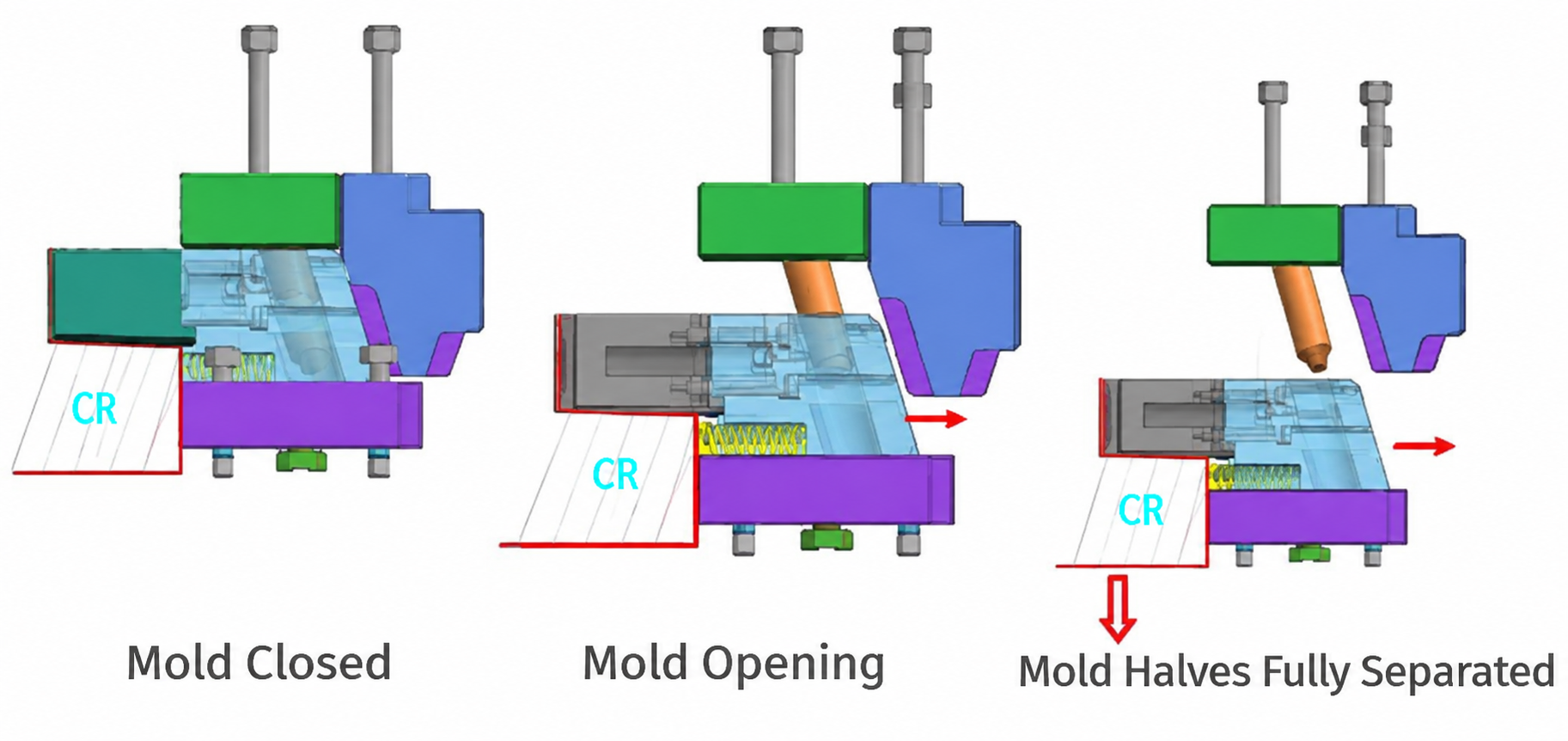
What causes difficult demolding? Customization Tech examines the causes and solutions from several perspectives below.
1. Mold-related factors
An unsuitable ejection structure or position: insufficient stroke, unbalanced ejection or poor ejector plate movement can prevent release. Where possible, increase the effective ejector pin contact area and ensure sufficient stroke. Control ejection speed within an appropriate range, neither too fast nor too slow. Poor plate movement is mainly caused by sticking between sliding components. For example, when the ejector plate drives a sliding core without cooling, its temperature exceeds that of other cores. During continuous operation the clearance between the column and sliding core becomes very small, often impairing core pulling. Poor parallelism between ejector pin holes and guide pins, or bent ejector pins, can also prevent proper operation. Without a stop pin, foreign matter between the ejector and mounting plates can tilt the plate and impair its movement. In medium and large molds, a single actuating ejector rod can unbalance the plate and cause poor operation.
Insufficient draft angle: adequate draft must be provided during mold design and manufacture. Otherwise, parts are difficult to release and forced ejection often causes warping, whitening or cracking. Moving and fixed mold plates should be relatively parallel to avoid cavity misalignment and poor release.
High mold temperature or poor ventilation: when release at the parting surface is difficult, increasing mold temperature and shortening cooling time may help. When release from the cavity surface is difficult, reducing mold temperature or increasing cooling time may help. Excessive mold temperature can also impair release. Porous soft cavity materials can cause sticking; hard steel or surface plating should be used. Poor sprue extraction, absence of a gate pulling mechanism, recessed parting surfaces and cavity edges extending beyond the closing line can all affect release and should be investigated and repaired.
Rough runner walls or cavity surfaces: dents or pits on runner surfaces can produce surface defects in the cavity. Improve the surface finish of the cavity and runners wherever possible. The document recommends chrome plating the cavity surface. During polishing, the tool should move in the direction of molten material flow.
2. Process-related factors
Excessive barrel temperature or injection volume: for difficult release at the parting surface, the document suggests adjusting mold temperature and cooling time, including shortening cooling time. For difficult release from the cavity surface, lower mold temperature or extend cooling. Excessive mold temperature can impair release. Porous soft cavity materials may cause sticking; hard steel or plating is recommended. Poor sprue extraction, missing gate pulling mechanisms, recessed parting surfaces and cavity edges beyond the closing line can all affect demolding and require attention and repair.
Unsuitable gating system design: overly long or narrow runners, weak sprue-to-runner connections, missing cold-slug wells, poor gate balance, mismatched sprue and nozzle openings, or mismatched sprue bushing and nozzle spherical surfaces can impair release. Shorten runners appropriately, increase their cross-sectional area to strengthen connections, and provide a cold-slug well in the main runner. After determining gate locations, auxiliary gates can balance filling rates in multicavity molds and reduce cavity pressure. Generally, the small-end opening should be 0.5–1 mm larger than the nozzle opening, and the concave radius of the sprue bushing should be 1–2 mm larger than the nozzle spherical radius.
3. Raw material factors
Unsuitable material selection: impurities introduced during packaging or transport, mixing different grades during predrying or preheating, or foreign matter in the barrel or hopper can cause sticking. Nonuniform or oversized pellets can also affect adhesion to the mold. Raw materials should therefore be purified and screened.
As a professional injection molding manufacturer, Customization Tech provides high-precision injection mold manufacturing and product molding. For inquiries, please email customizationtech@gmail.com.